
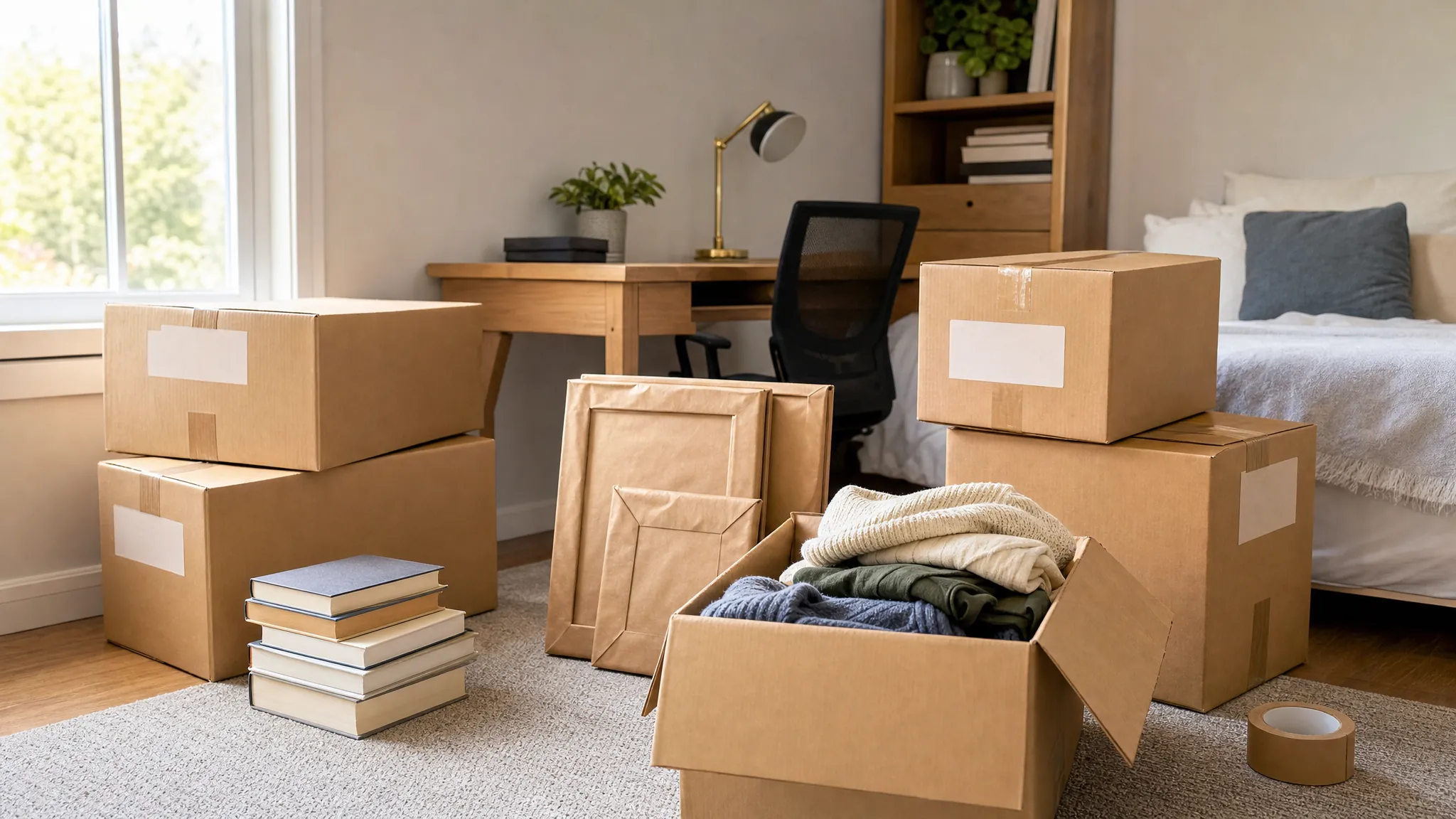
The easiest way to lose momentum before a move is to begin with the rooms you still need every day. A better approach is to pack in layers. Start with low-use belongings, move through the rooms that can be partially boxed, and save daily essentials for last. You make visible progress without living out of boxes for weeks.
Use this as a flexible order, not a rigid rule. A home office, nursery or hobby room may need a different pace than the rest of the house. The goal is simple: every box should reduce future work while keeping your current life workable.
Start with storage spaces and low-use belongings
Your first boxes should come from things you will not need this week. Think holiday decor, seasonal clothes, books you will not reread before the move, extra bedding, wall art, collectibles and seldom-used serving pieces. Garages, closets, attics, basements and spare rooms are good starting points because they hold a mix of useful things and forgotten things.
As you pull items out, make three simple decisions: pack it, donate it or dispose of it. Moving is an expensive time to transport things you already know you will not use. Keep a donation bag and a trash bag nearby so the room becomes lighter as you pack, not just more crowded.
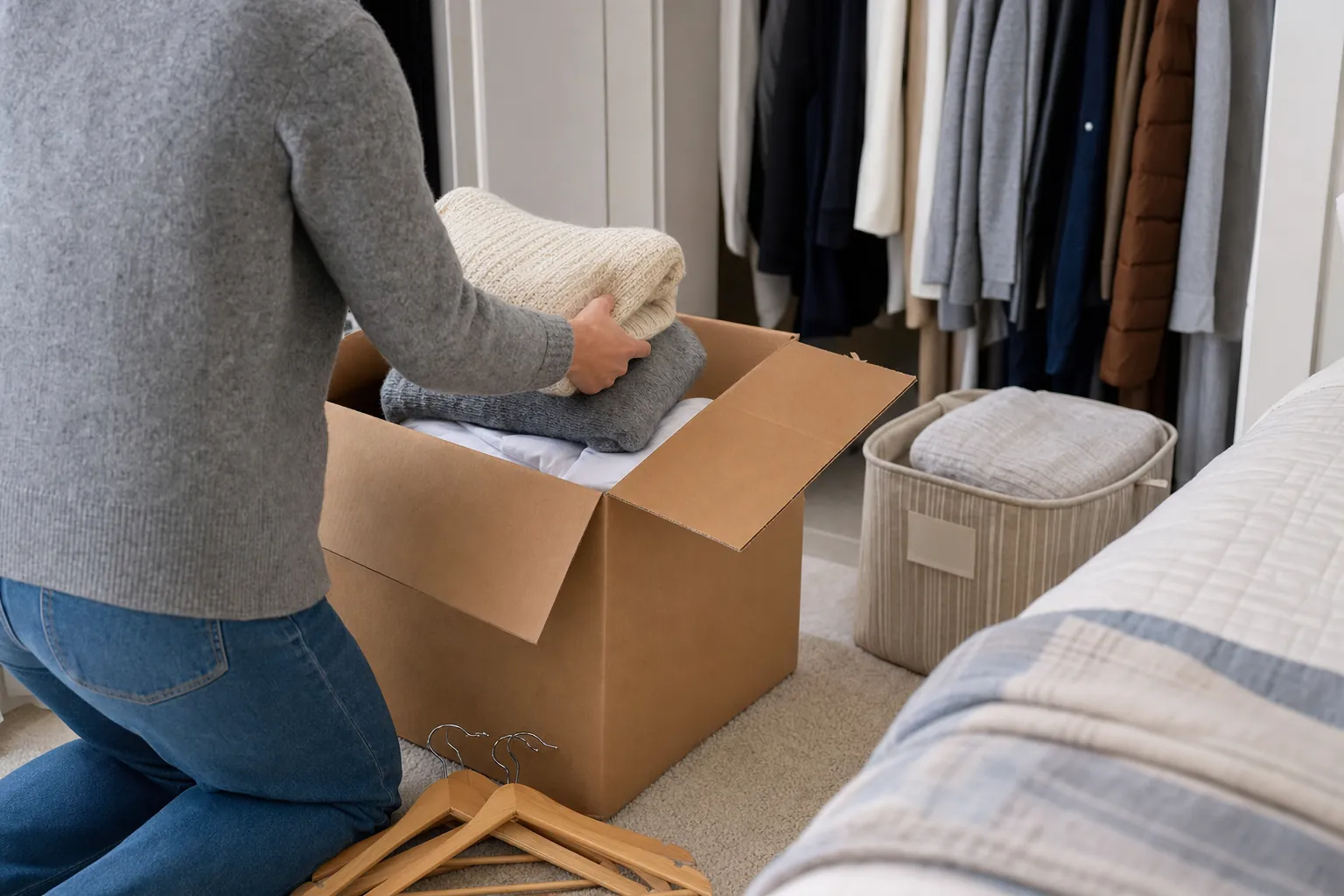
Label every box for the next home
Every packed box needs more than a room name. Write the destination room on two sides and the top, then add a short description of the contents. “Kitchen” is not nearly as useful as “Kitchen: baking tools and serving bowls.” “Bedroom” becomes much easier to unpack when it says “Primary bedroom: winter clothes and extra linens.”
Keep the system simple enough to use on every box. A thick marker, a consistent room name and a few specific words are enough. If several people are packing, agree on the same room names before you begin. That small bit of consistency prevents a pile of boxes marked “bedroom,” “main,” “upstairs” and “mine” from becoming a mystery at the new home.
For anything that must be opened quickly, add a clear note such as “open first” or “needs careful handling.” Reserve that language for the few boxes where it truly matters. When every carton is marked urgent, none of them are.
Finish one room before opening another
After storage areas, choose the least-used room and finish it before moving to the next. A guest room is often a good second step. Then work through decorative shelves, media, extra towels and furniture pieces that are not part of your daily routine. Working room by room keeps labels clear and makes it easier to find what belongs together when you unpack.
Do not empty every drawer and cabinet at once. Leave one small working zone in each active room for the things you need until the move. In the kitchen, that might mean one plate, one mug, one pan and a few utensils per person. In the bathroom, it might mean a small toiletry bag and the towels currently in use.
Work toward rooms you use every day
Once low-use rooms are under control, begin packing the parts of daily rooms that can be spared. In bedrooms, box out-of-season clothes, extra shoes, books and decor first. In living areas, pack movies, games, display pieces and extra throw blankets before furniture and everyday electronics.
In the kitchen, start with specialty appliances, baking supplies, serving dishes and pantry items you will not use before the move. Keep a quick meal plan for the final week so you are not forced to buy more groceries while the kitchen is half-packed. As moving day gets closer, use up refrigerated and frozen food, then leave only the basics.
Keep boxes liftable and furniture ready
It is tempting to fill every box to the top, especially with books, dishes or tools. A safer approach is to keep dense items in smaller boxes and use larger cartons for light, bulky belongings such as pillows, linens and lampshades. Fill empty space with packing paper or towels so items do not shift, but stop before a box becomes difficult for one person to control.
As you work through each room, make a quick note of furniture that needs attention. Empty and secure desk drawers, remove loose shelves, collect remote controls and cords, and set aside the hardware you will need later. Put screws, bolts and small brackets in a labeled bag and keep that bag with the matching piece when appropriate.
Take a few photos of cable connections before unplugging televisions, computers or entertainment systems. The photos are not a substitute for careful packing, but they remove one frustrating guessing game when you are setting up again.
Protect fragile and awkward items before the rush
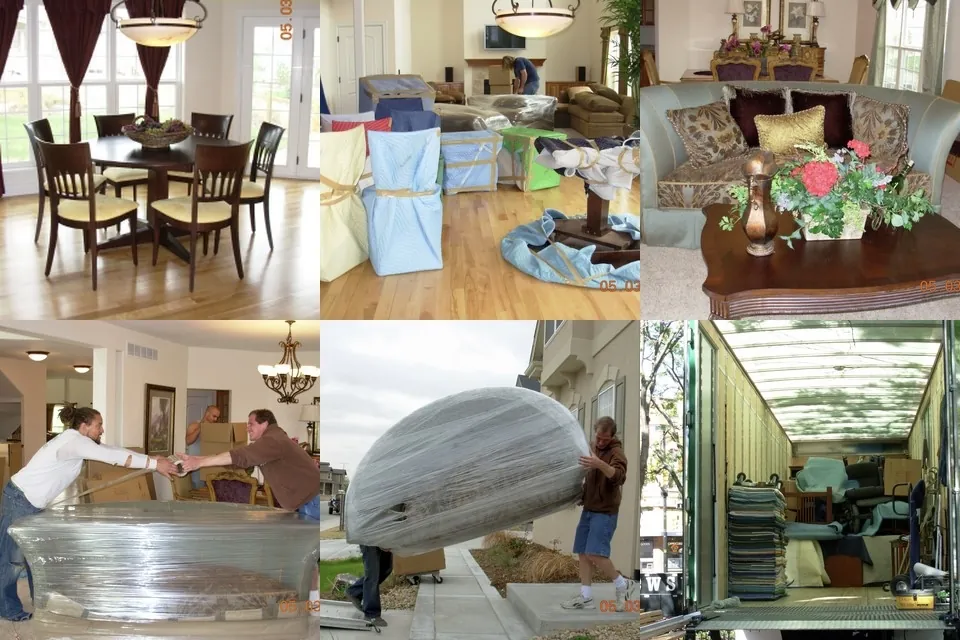
Fragile items deserve their own pace. Wrap glassware, framed art, lamps, electronics and breakable decor before the final few days, when people are more likely to cut corners. Use boxes that match the item, add padding at the bottom and top, and avoid making a box too heavy to lift safely.
Some belongings are better handled with professional materials and experience. Taylor can help with full or partial packing, including furniture protection and the items that need more than a standard box. That can be especially helpful when a move includes artwork, antiques, large mirrors, a piano or a tight moving timeline.
Set aside what should travel with you
Not every item belongs on the truck. Create a separate folder, bag or tote for important documents, medications, jewelry, keys, financial records, chargers and anything you would be stressed to lose for even one day. Keep it with you rather than placing it in a moving box.
Do not guess about paint, fuel, propane cylinders, chemicals or other hazardous materials. The U.S. Department of Transportation’s hazardous materials guidance explains that these items have specific transportation rules, and local household hazardous waste programs can tell you how to dispose of items that should not go in a moving truck. Check with your mover and your local program before moving day.
Plan for pets, kids and the final 48 hours
The last two days are easier when the people and pets in the household have a separate plan. Pack a small bag with medications, snacks, chargers, paperwork, water and a change of clothes. Keep pet food, leashes, carriers and familiar bedding together. For children, a favorite book, comfort item or easy activity can make an unfamiliar day feel more manageable.
Use the final evening to confirm the details that can slow down a crew. Make sure there is a clear path to the door, reserve an elevator if your building requires it, check parking rules, and separate anything that is not moving. If you are leaving keys or meeting a property manager, put that information with your move documents instead of relying on memory.
Finally, walk through each room with an empty bag or box. You will often find the small things that get missed: items in a charging drawer, shower shelves, the back of a closet, the refrigerator door and the garage workbench.
Build an essentials box for the first night
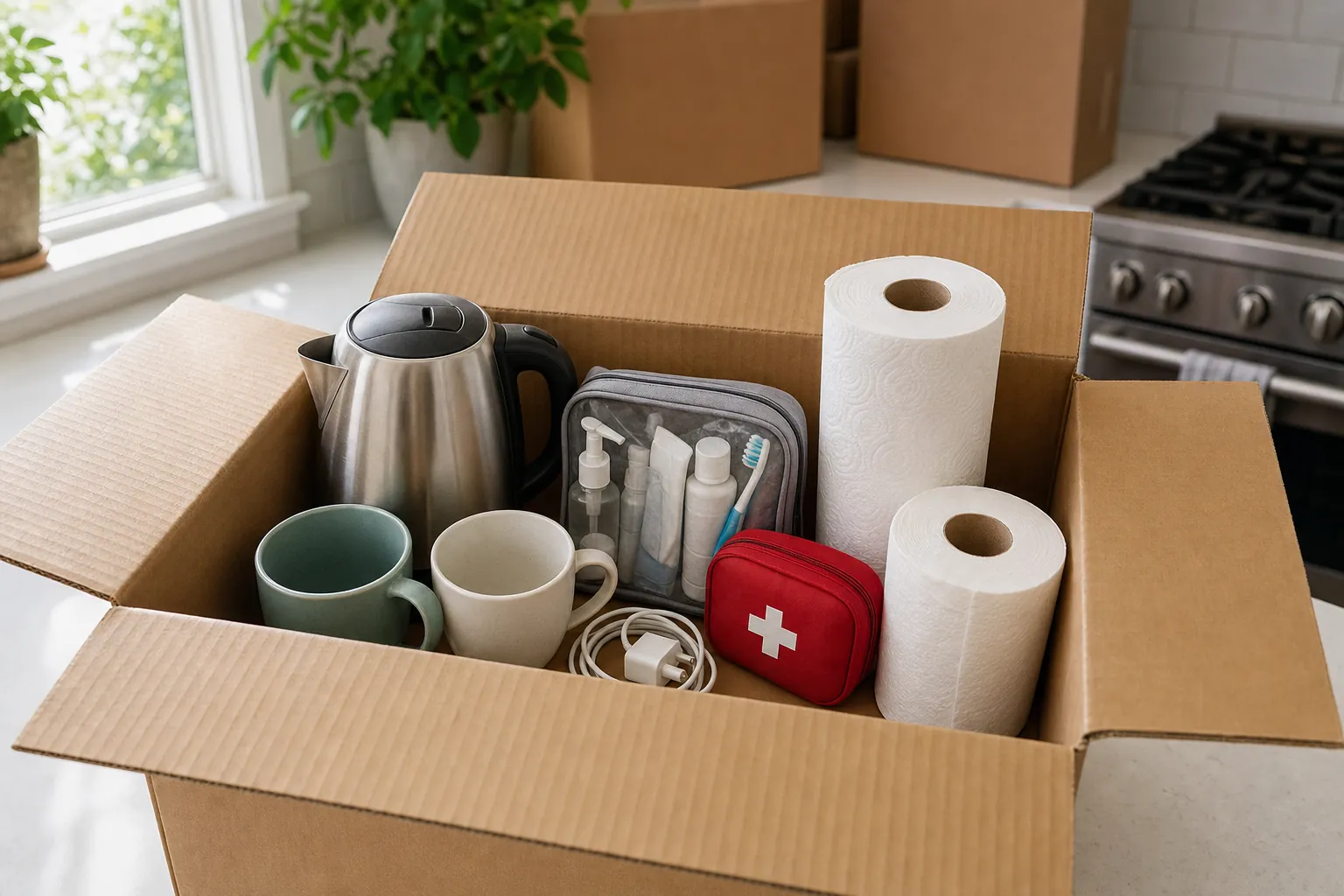
Your last box should be the first one you open. Pack the practical things that make the first evening and next morning easier: toilet paper, hand soap, towels, phone chargers, a basic first-aid kit, snacks, water, coffee or tea supplies, a kettle or small coffee maker, simple dishes and a change of clothes.
Families may also want pajamas, medications, favorite comfort items and a few easy activities for children. Label this box in a way that is impossible to miss. Better yet, load it into your own vehicle, so you do not have to search through a stack of similar cartons when you are tired and the kitchen is still bare.
Make unpacking easier before the truck arrives
Packing order affects unpacking order. Before moving day, decide which rooms should be ready first at the new home. Most households need bedrooms, a bathroom and the kitchen basics before anything else. Mark those boxes clearly, and make sure the people unloading know which room each one belongs in.
Keep related things together whenever you can. Put bedding with the bedroom it belongs to, keep everyday cookware in the same box family, and avoid mixing a little from every room into one last-minute carton. A few carefully packed boxes are much easier to unpack than one box full of unrelated loose items.
It also helps to plan where larger furniture will go before the crew arrives. Clear a path to each room, know which pieces need assembly, and keep simple floor notes or photos handy if the layout is unfamiliar. Those decisions let moving day stay focused on moving instead of turning into a series of guesses.
When possible, place a few empty boxes and packing paper near the entry for items you discover at the last minute. This avoids reopening sealed cartons and gives small, loose belongings a clear place to go without interrupting the rest of the plan.
Handle the final week with a short daily list
The final week is not the time for a giant, vague to-do list. Give each day a few clear jobs. Finish the closets on one day. Pack the pantry and most kitchen items on another. Confirm access instructions, parking and elevator details. Put aside cleaning supplies for the old home. Keep your move documents and estimate in one place.
Before you change addresses or mail forwarding, review the timing. The U.S. Postal Service’s change-of-address guidance explains how to forward mail and choose an effective start date. Update the accounts that matter most directly too, including banks, insurance, schools, health providers and subscriptions.
On moving day, leave one small cleaning kit out until the truck is loaded. A roll of paper towels, trash bags, basic cleaner and a broom can be enough for a final check of cabinets, shelves and closets. Then put that kit near the door or in your vehicle so it does not disappear into the last stack of boxes.
How Taylor helps when the packing plan gets tight
There is no prize for doing every part of a move alone. If time, access or fragile belongings are making the plan harder, Taylor can take on the whole pack or the specific rooms that need help. A clear conversation about your inventory, moving date and access lets the team match the right crew, materials and protection to the work.
Explore Taylor’s moving services, see the available packing options, or request an estimate when you are ready to turn the checklist into a practical plan.
Frequently asked questions
What should I pack first when moving?
Pack the things you use least first: off-season clothes, books, wall decor, guest-room items, extra linens and rarely used kitchen gear. This clears visible space without disrupting your regular routine.
When should I start packing for a move?
For a typical household move, begin sorting and packing low-use items about six to eight weeks before moving day. If your move is sooner, start with storage spaces and nonessential rooms, then work toward the rooms you use every day.
What should I keep until the last day before moving?
Keep daily clothing, medications, important documents, chargers, basic toiletries, pet supplies and a few kitchen essentials available until the end. Pack those items in clearly marked bags or boxes that travel with you.
Should I pack my own fragile items?
You can pack many fragile items yourself when you have the right boxes, padding and time. Professional packing is a useful option for artwork, antiques, large collections, glassware or any room that needs careful, efficient attention.


