Shoes are easy to leave until the last minute because they seem durable. Then moving day arrives, the entryway is full of loose pairs, and a box that looked harmless ends up scuffing dress shoes, flattening boots or separating a favorite pair. A simple system keeps footwear clean, paired and easy to unpack without turning the closet into a major project.
Start with the same goal you would use for any room: pack what you will not need first, protect the pieces that are easy to damage, and leave yourself a small set of essentials for the days around the move. The right box matters, but the order of the work matters just as much.
1. Gather the supplies before you empty the closet
Most households only need clean packing paper, a marker, packing tape, a few small or medium boxes, and any original shoe boxes they saved. Keep a soft cloth nearby for dirt or dust, along with a small bag for laces, insoles or shoe-care items that should stay together. For delicate heels, leather shoes or formal footwear, add tissue paper or a little bubble wrap.
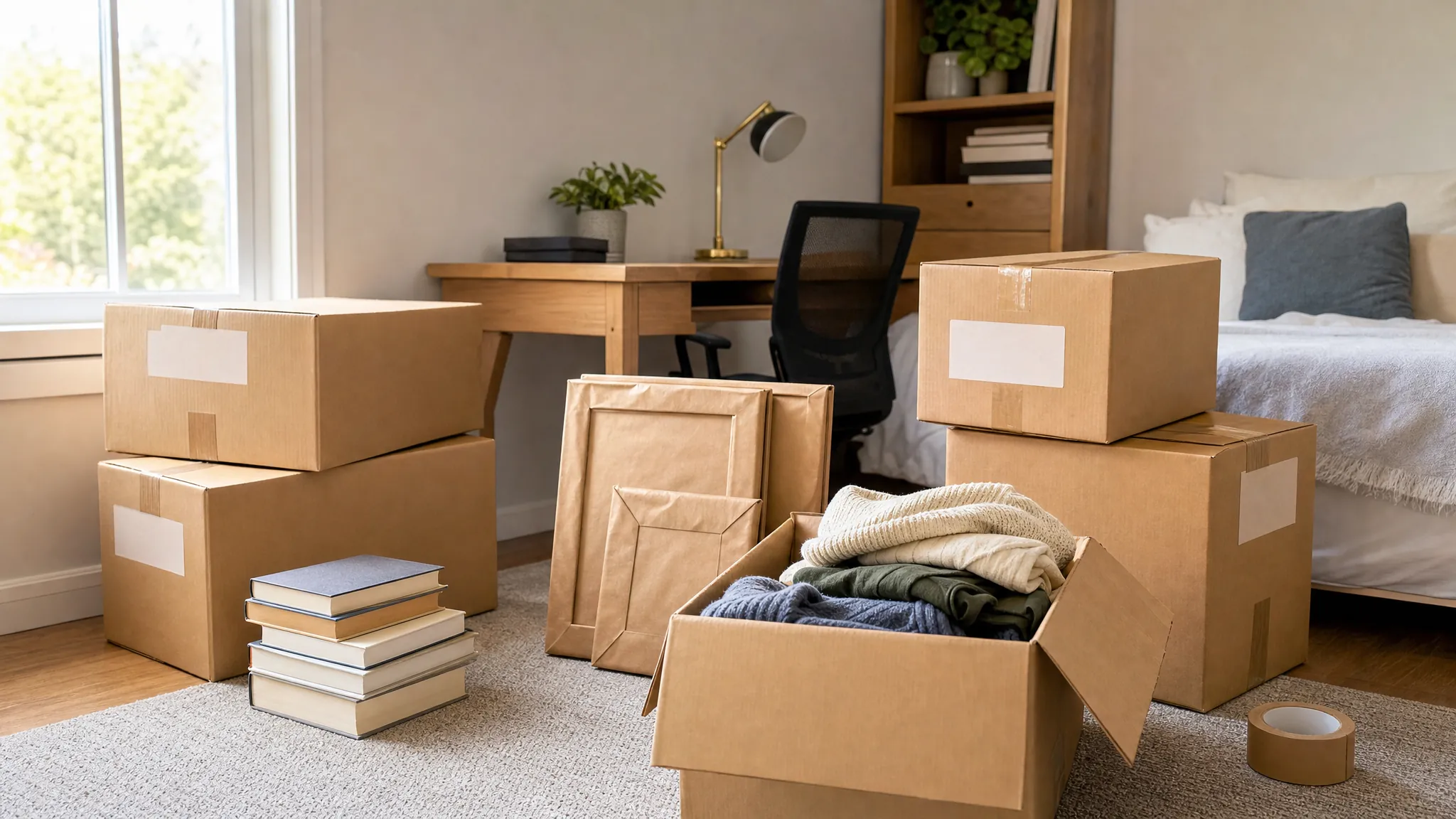
Choose smaller boxes than you think you need. Shoes are bulky and surprisingly heavy once a box is full. A manageable carton is easier to carry through a doorway, easier to place in the truck and less likely to crush the pairs at the bottom. Avoid using a large box simply because it has room. That extra room lets shoes shift, tumble and press against one another.
2. Sort footwear by use, season and how much protection it needs
Bring shoes together from closets, entryways, mudrooms, cars and gym bags. Then make four simple groups: pairs you wear this week, seasonal or occasional pairs, delicate or expensive pairs, and shoes you no longer want. Sorting first stops you from transporting shoes you have already outgrown or do not plan to wear again.
Keep each household member’s shoes separate while you sort. That makes labeling clearer later and prevents a child’s sneakers or a partner’s work boots from turning up in the wrong room. Put the pairs you will use before and immediately after the move in a separate tote. The rest can be packed by type, season or owner, whichever will make the new closet easier to set up.
Good-condition pairs you no longer need can be set aside for donation. The point is not to force a huge closet cleanout in one afternoon. It is to avoid spending time, truck space and unpacking energy on footwear that has already lost its place in your routine.
3. Clean and fully dry every pair before it goes in a box
Wipe off loose dirt, road grit and moisture before packing. Shoes that are sealed damp can transfer dirt to other pairs and develop an unpleasant smell while the box is closed. Let athletic shoes, work boots and anything recently worn in rain or snow air out completely before you wrap or stack them.
Use clean packing paper, not newspaper or colored tissue. Ink can transfer to light-colored leather, canvas and fabric. The packing guidance from The Home Depot makes the same practical point: dry, clean footwear and plain paper reduce the chance of staining or trapped moisture during a move.
If a pair needs a repair, decide whether it is worth handling before the move. A loose heel, worn sole or broken lace is easier to notice while shoes are in front of you than after they are boxed. Keep repair pairs in a separate bag so they do not get packed and forgotten.
4. Keep each pair together and support the shapes that can collapse
Place the two shoes together before they go in the box. For laced shoes, loosely tie the laces so the pair stays connected without pulling hard on the eyelets. For sandals or slip-ons, a light paper wrap around the pair is usually enough. Do not use tape directly on leather, suede, fabric or a shoe’s finish.
Stuff dress shoes, sneakers with soft toes and boots with clean packing paper, tissue paper or clean socks. The goal is gentle support, not pressure. Fill the toe area and, for tall boots, the shaft so the footwear holds its normal shape. Shoe trees are useful for a pair you already store with them, but you do not need to buy special equipment for every shoe in the house.
Keep buckles, heels and hard soles from rubbing against softer materials. A single sheet of paper between each pair is often enough for everyday shoes. Wrap fragile heels, polished dress shoes or suede pairs individually. That small amount of separation prevents scuffs without making every carton oversized and wasteful.
If shoes are stored in clear bins or an over-the-door organizer today, take a quick photo before taking them apart. The picture gives you a useful reference when you are setting up a closet that may have a different layout. It also makes it easier to spot a missing pair before the truck leaves. A short checklist on your phone works well for specialty footwear, such as ski boots, cycling shoes, cleats or dress shoes that are only worn for certain events.
5. Use the right packing method for sneakers, boots and delicate shoes
Everyday sneakers and casual shoes are usually the simplest group. Place them in pairs with packing paper between layers, positioning the soles away from delicate uppers when possible. Sneakers can nest heel-to-toe in a box if they are clean and dry, but do not force them into a tight shape that bends the sole or crushes the toe box.
Boots need a little more planning. Stuff tall shafts so they stay upright, then place boots near the side of a medium box where they will not be folded under other footwear. Heavy hiking or work boots belong at the bottom of the carton. Put lighter shoes above them with a paper layer in between. If your boots have mud or snow residue, clean and dry them first so the moisture does not travel with the box.
For heels, leather dress shoes, formal shoes and pairs with delicate straps, original shoe boxes are ideal when you still have them. If not, wrap each shoe separately with tissue or clean packing paper and keep the pair in a smaller carton. North American Van Lines’ footwear packing guidance also recommends keeping heavier shoes low in the box and delicate pairs protected separately, which is a sensible rule when a mixed collection has to travel together.
6. Pack boxes by weight, not just by available space
Line the bottom of a sturdy small or medium box with crumpled packing paper. Set heavier boots and sturdier shoes on the bottom, then add a layer of paper before lighter pairs. Keep the box comfortably liftable. If it feels awkward before the lid is taped, split it into two cartons. A box of shoes should not become a test of how much someone can carry down stairs.
Fill open spaces with paper so pairs cannot slide around, but do not compress them until the lid bows. Close the lid without forcing it. Then label at least two sides with the owner or room, the type of shoes and whether the box should be opened early. “Primary closet, winter boots” or “Entryway, everyday shoes” gives you a useful answer when you are standing in the new home surrounded by boxes.
On the truck, place shoe boxes where they will stay dry, upright and away from heavy furniture or dense cartons. Do not use them as a base for books, tools or appliances. Shoes can handle normal handling, but the shape and finish of a pair are still vulnerable when a much heavier box sits on top for a long drive.
Keep storage conditions in mind after the move too. Shoes do best when they are clean, dry and not squeezed under changing stacks of household items. If a box will stay closed for a while, label it clearly and avoid placing it directly on a damp basement floor or in an unventilated outdoor shed. That is especially important for leather, suede and athletic shoes that have been worn hard before packing.
7. Set aside a moving-day shoe plan
Keep the shoes you will wear on moving day out of the packing pile. Choose a closed-toe, secure pair with grip that suits the weather and the work you will be doing. If you are driving between homes or walking through an empty house, bring a backup pair too. Colorado weather can change quickly, and the shoes you want for a dry morning may not be right for a wet afternoon.
Put a pair of comfortable shoes, slippers or sandals for the first night in the same essentials bag as medications, chargers, basic toiletries and a change of clothes. Taylor’s guide to what to pack first when moving can help you set aside the rest of those high-use items before the last day becomes busy.
8. Unpack shoes with a plan, not all at once
At the new home, open the everyday and moving-day box first. Check that each pair is dry, shaped correctly and still matched before putting it away. Then unpack seasonal boxes when the closet or entryway is ready. This prevents a pile of loose shoes from taking over the bedroom while furniture is still being placed.
Give yourself permission to unpack footwear in stages. Start with work, school, exercise and weather-ready pairs. The rest can wait until the closet shelves, racks and entry storage are assembled. This small order makes the first week feel more settled without asking you to finish an entire room before you have had a chance to rest.
For long-distance moves or any situation where belongings will spend time in storage, let shoes air out briefly before putting them into a closed closet. If moving dates do not line up, Taylor can coordinate climate-controlled storage as part of a broader moving plan. That is especially useful when household items need a reliable place between homes, rather than sitting in a garage or vehicle.
When professional packing is worth considering
Shoes are normally a straightforward do-it-yourself job. Professional help becomes more useful when the closet is one part of a larger, time-sensitive pack, when you have a large collection of delicate pieces, or when the household needs help getting several rooms ready at once. Taylor’s full and partial packing service can take pressure off the rooms that need careful materials and a steady system.
For a complete household move, Taylor has provided reliable, affordable Colorado moving help since 1997. Share the addresses, timing, home size and any packing needs when you request a free moving estimate. The team can help shape a plan around the work that actually needs doing, from the first packed closet to the final room.
Frequently asked questions
What is the best way to pack shoes for moving?
Clean and dry each pair, keep the pairs together, fill shoes that can lose their shape, and use a small or medium box with clean paper between layers. Put heavier footwear at the bottom and do not stack heavy boxes on top.
Can I pack shoes in garbage bags for a move?
A clean bag can carry a small group of shoes on a short trip, but it offers little structure or protection. For footwear that could be crushed, scuffed or stored for more than a day, use a sturdy box and clean packing paper instead.
How do I pack boots so they do not bend?
Use clean packing paper or a boot form to support the shaft, then place boots upright in a box that gives them room without letting them fall over. Avoid forcing tall boots into a shallow carton or bending the shaft sharply.
Should I put shoes in the moving truck?
Most everyday shoes can travel in a labeled moving box. Keep the pair you will wear on moving day, a weather-appropriate backup pair, and any shoes you would be upset to lose in a bag or tote that stays with you.