
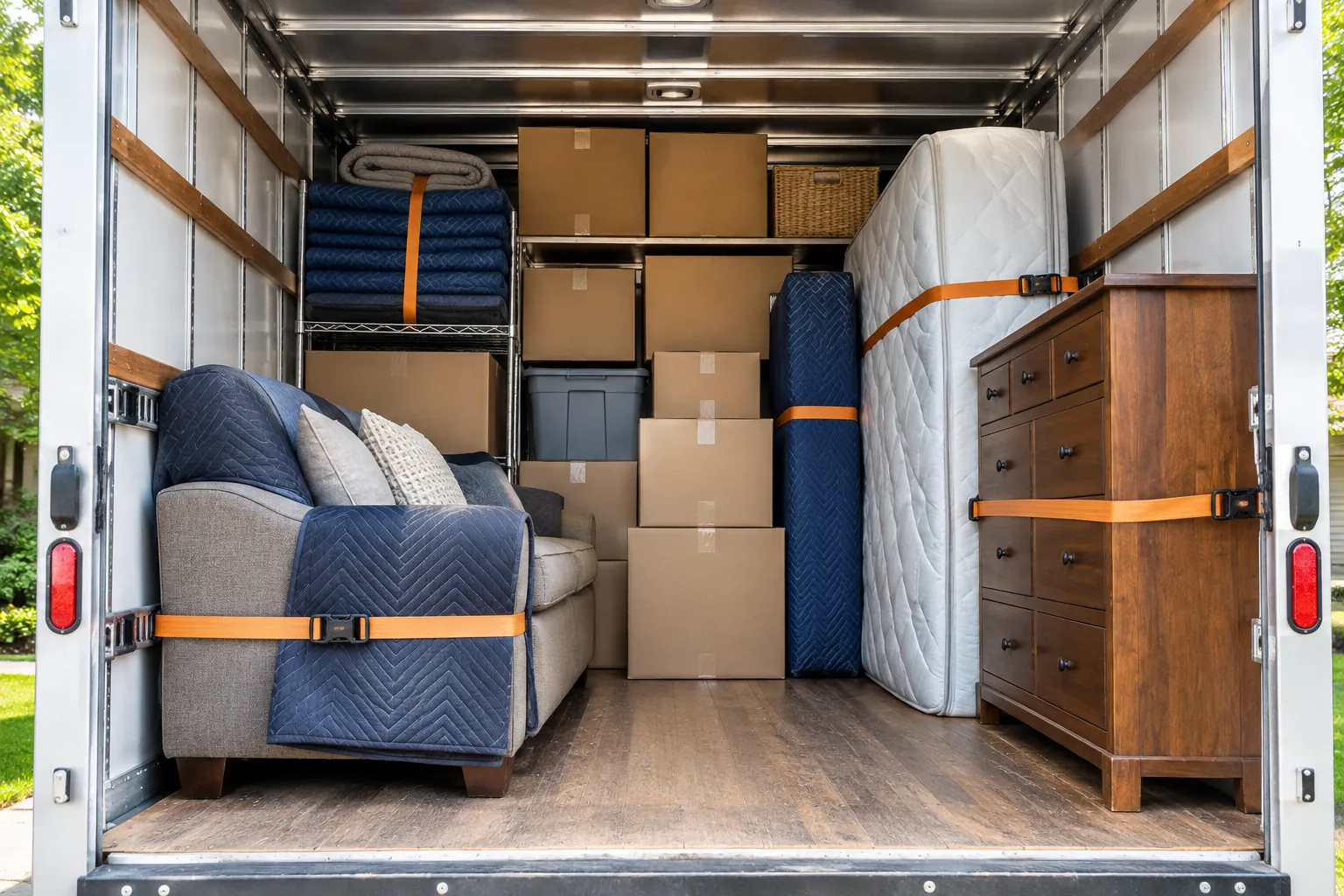
A moving truck is safest when it is loaded as a single stable unit, not as a collection of items that happen to fit. The order matters: build a solid base at the front, protect the furniture as you go, keep weight low and even, then close every gap before the truck rolls. This guide is for a household rental truck or cargo van. Always follow the instructions for your specific rental and do not move anything you cannot safely control.
1. Choose the truck and make a loading plan before lifting
Start with the actual cargo area, not a hopeful guess from the driveway. Look at your largest pieces, estimate how many rows of boxes you have and make sure the truck has enough length, height and tie-down points. A truck that is too small forces unstable stacking. A much larger truck can also be difficult if the load is left loose at the front with empty space behind it.
Walk through your home and group the load into large furniture, medium pieces, heavy boxes, light boxes and items that should travel with you. Put the things that must come off first at the new home on a written list. This prevents the classic last-minute mistake of burying a bed frame, a coffee maker or the box with the door keys behind everything else.
2. Gather protection and secure the truck before you begin
Bring moving blankets, stretch wrap, mattress bags, strong tape, a hand truck, furniture pads, box labels and tie-down straps rated for cargo. Confirm the truck has a clean, dry floor and working anchor rails. The U-Haul loading guide recommends loading boxes by their contents’ weight rather than the box size, a practical rule that keeps a deceptively heavy carton from ending up on top of something fragile.
Park as close as safely possible, open the ramp only when the path is clear and keep children and pets out of the loading lane. If the truck will be on a slope, set the parking brake and follow the rental company’s directions. The goal is not speed. It is a controlled path from room to truck with no loose furniture, tripping hazards or surprise lifting decisions.

3. Prepare furniture so it becomes a stable building block
Take apart what genuinely needs to come apart: bed frames, detachable legs, shelves and other pieces that become safer or easier to carry in sections. Put bolts and hardware in a labeled bag, secure it to the matching piece when sensible, and photograph complicated connections before disassembly. Close and secure drawers, doors and removable shelves so they cannot open or slide out during the drive.
Wrap wood, upholstery and finished surfaces with moving blankets, then secure the blankets to themselves with stretch wrap or tape. Do not tape directly to delicate finishes. A padded dresser is less likely to be scratched by the next item, and it also provides a sturdier surface for the rest of the load. For more detailed preparation, Taylor’s guide to packing furniture for moving covers padding, hardware and larger pieces room by room.
4. Load the front wall with the heaviest, most stable pieces
The front wall is the end nearest the cab. Start there because a heavy base at the front gives the rest of the truck something firm to build against. Load appliances, dressers, sofas, bookcases and other heavy furniture first, placing weight as low as possible. Keep the load balanced from left to right rather than putting every heavy item on one side.
Place upright furniture in the position it was designed to travel when possible, with padded surfaces facing other padded surfaces. A mattress or long flat item can sometimes make a useful protected wall, but only when it is supported and tied in so it cannot bow or tip. Do not leave a tall piece standing free just because it looks snug in a still truck. Braking and turns change the forces quickly.
5. Work in tight tiers, one secured section at a time
Think in sections from the front of the truck toward the rear door. Build the first tier with large furniture and dense boxes, fill its open spaces with suitably sized cartons or soft items, then strap that tier to the truck rails before beginning the next. A strap is not decoration. It holds the completed section in place if the truck stops, turns or travels over uneven pavement.
Use boxes to fill square gaps, not to prop up a leaning piece. Heavy boxes belong on the floor or low in the stack. Lighter boxes, linens and cushions can sit above them. The Home Depot truck-loading guidance similarly calls for heavy furniture first, lighter boxes above heavier ones and tie-downs to prevent shifting. That order protects both the boxes and the people who unload them.

6. Treat fragile belongings as protected cargo, not gap fillers
Pack dishes, glassware, lamps, framed pieces and electronics in purpose-built or well-cushioned boxes before they reach the truck. Marking a carton helps, but good packing is what protects the contents. Keep fragile boxes high enough that heavy items cannot crush them, but not so high that they can fall from an unstable tower. Fill space around them with light, soft items rather than hard furniture corners.
Televisions, mirrors and artwork need their own plan. Keep them upright where their packing instructions call for it, pad both faces and anchor them so they cannot slide. Taylor’s guides on packing a TV, packing mirrors and packing fragile household items explain how to prepare those pieces before they go near the truck.
7. Save light boxes and soft items for the final layers
Use linens, pillows, bagged clothing and lighter cartons to fill awkward upper spaces after the stable base is in place. These items can help prevent rubbing and shifting, but they should not carry the weight of furniture or appliances. Keep the rear portion of the truck organized enough that you can close the door without forcing it against a loose stack.
Avoid stacking to the ceiling unless the stack is level, supported and appropriate for the truck’s interior. A lower, compact load is safer than a tall one with a weak top row. If you have an unfinished section, stop and redistribute rather than making one box act as a wedge. The few minutes spent rebuilding a tier are far cheaper than a damaged load or an injured helper.
8. Keep essentials and prohibited items out of the cargo area
Your first-night bag, medications, passports, keys, paperwork, jewelry, chargers, pet supplies and a change of clothes should stay with you. So should anything you will need before the truck is unloaded. A moving truck can arrive later than planned, and those items are much less stressful when they never disappear into the cargo area.
Check the rental agreement for items that must not travel in the truck. Common examples include flammables, propane, fuel containers, aerosols, live plants and hazardous chemicals. Do not assume a sealed container makes an item acceptable. When in doubt, ask the rental company or use an appropriate disposal option before moving day.
9. Do a final stability check before driving
Walk through the truck from front to rear. Test straps, look for empty pockets near large furniture and make sure no drawer, handle or sharp edge can press into a soft surface. Close the ramp and door according to the rental instructions, then drive with the slower braking distance and wider turns a loaded truck requires. A well-loaded truck still needs patient driving.
Before the first turn, pause at a safe place and listen for shifting or rattling. If a strap has loosened or a stack has settled, correct it before continuing. During a long trip, inspect the cargo whenever you stop. Temperature changes, road vibration and ordinary movement can expose a gap that was not obvious in the driveway. It is better to make a small adjustment at a rest stop than discover the problem after opening the rear door.
At the new home, unload in the reverse of the safest loading sequence, removing light and loose items first before dismantling the heavy sections. Clear a path inside before bringing in the largest pieces. This is where labels and a room plan pay off: the right box goes to the right room once, instead of being shifted repeatedly after everyone is tired.
When professional loading help is worth it
A rental truck can make sense for a small, straightforward move, but loading gets more demanding with stairs, heavy furniture, long carries, a large household, fragile rooms or a tight schedule. Taylor Moving has served Colorado households since 1997 and can build a reliable, affordable plan around packing, furniture protection, loading, transportation, unloading and placement. Professional help means the truck load is part of one coordinated household move, not a puzzle you have to solve on the day.
If you are still deciding what level of help fits, explore Taylor’s full-service residential moving and loading and unloading help. When you are ready, request a moving estimate with the addresses, access details and the items that need extra care.
Frequently asked questions
What should be loaded first in a moving truck?
Load the largest, heaviest and most stable furniture first, positioned against the front wall of the cargo area. Build a firm base before adding boxes, then use straps and padding as each section is completed.
Should furniture be loaded upright or flat?
Keep pieces upright when that is how they are designed to stand, unless the manufacturer or the piece’s construction calls for another position. Protect surfaces with moving blankets and avoid stacking heavy boxes on delicate furniture.
How do I keep a moving truck balanced?
Distribute heavy weight from side to side and keep the densest pieces low. Fill gaps so the load cannot shift, then use rated tie-downs attached to the truck’s rails. If the load feels loose before departure, rearrange it.
What should travel in my car instead of the moving truck?
Keep medications, important documents, keys, valuables, chargers, a change of clothes and anything needed the first night with you. Do not load hazardous materials, fuel containers or other items prohibited by the rental company.